
Water Waste in Healthcare: How Hospitals Can Optimize Usage for a Greener Future

Introduction
As we’ve written before, water is one of the most overused yet under-monitored resources in hospitals across the globe. As the healthcare sector increasingly concentrates on energy efficiency and minimizing its carbon footprint, water sustainability remains an afterthought.
Just a single hospital bed can consume 470 liters of water a day, and a major hospital can use up millions of gallons of water a year. From sterilization to sanitation, patient care to cooling systems, hospitals require a steady stream of water — but how much of it is absolutely necessary?
As water shortages become an increasing global problem, hospitals must reconsider how they manage water. Reducing water waste is no longer just about saving money; it’s an important step toward environmental responsibility, regulatory compliance, and long-term sustainability.
But why is the healthcare industry so far behind in water conservation? And how can hospitals adopt evidence-based solutions without trading off patient safety and hygiene?
This piece explains how hospitals waste water, the hidden costs of waiting to act, and how innovative strategies are greening up healthcare — without disrupting patient care.
The Invisible Issue: How Hospitals Waste Water Every Day
1. Excessive Use of Water-Intensive Equipment
– Autoclaves and Sterilizing Units: Conducting thousands of sterilization cycles in large hospitals every day at hundreds of gallons per cycle.
– Cooling Towers: Many hospitals operate outdated cooling systems that waste enormous amounts of water by evaporating excess water into the atmosphere.
2. Poor Plumbing and Inefficient Infrastructure
– Piping systems and leaky faucets waste thousands of liters of water at each hospital annually.
– Old manual-flushing toilets use 10+ liters per flush, whereas modern low-flow toilets use only 3 liters per flush.
3. Overuse of Water in Patient Care
– Water wastage caused by unmonitored handwashing and sanitation.
– Unregulated patient showers — especially in long-term care facilities — add up to excessive use.
4. Waste Related to Medical Procedures and Cleaning Routines
– Inefficient disinfecting processes consume more water than required.
– Pre-rinsing surgical instruments before sterilization results in thousands of gallons of wasted water annually.
5. Lack of Staff Awareness
– Many healthcare workers and facility managers do not realize how much water they use each day.
– Without clear policies on conservation, overuse becomes the default behavior.
Why Wasted Water in Healthcare Comes at a Much Higher Price
1. Escalating Utility Costs
– Due to rising demand, outdated infrastructure, and lack of monitoring, hospital water bills are rising rapidly.
– Wasting water also wastes energy needed for heating, pumping, and treating wastewater.
2. Compliance and Regulatory Risks
– Governments and environmental agencies are tightening regulations on water conservation in healthcare.
– Hospitals failing to meet sustainability goals risk penalties, increased operating costs, and reputational damage.
3. Impact on Emergency Preparedness
– Hospitals must prepare to maintain water security in the face of natural disasters or infrastructure failures.
– Many hospitals are over-reliant on large water reserves, making them vulnerable to future shortages.
4. Reputation and Patient Trust
– Sustainability practices are now a factor in hospital rankings, particularly in medical tourism markets.
– Patients and stakeholders are increasingly demanding environmentally responsible hospitals.
Creative Ideas: Ways Hospitals Can Increase Water Efficiency
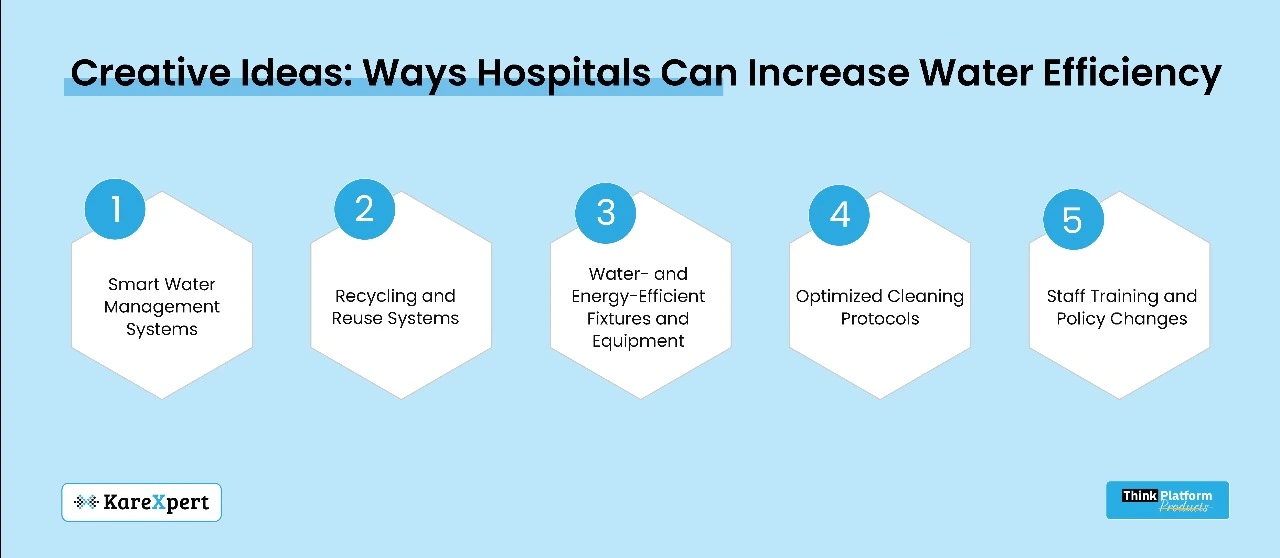
1. Smart Water Management Systems
– AI-powered sensors and IoT-enabled plumbing can detect leaks and monitor water consumption in real time.
– Hospitals can automate water flow to adjust pressure and reduce waste.
2. Recycling and Reuse Systems
– Greywater recycling allows hospitals to reuse non-contaminated wastewater for toilets, cooling, and irrigation.
– Rainwater harvesting can supply many non-drinking water needs.
3. Water- and Energy-Efficient Fixtures and Equipment
– Replacing toilets, sinks, and sterilization equipment with water-efficient models can reduce water waste by 30-40%.
– Closed-loop cooling towers prevent unnecessary water loss.
4. Optimized Cleaning Protocols
– Transitioning from high-pressure rinsing to mist-based disinfection methods.
– Microfiber mops use 90% less water than traditional wet mopping.
5. Staff Training and Policy Changes
– Simple water-saving habits can be implemented with minimal training.
– Mandatory water conservation policies ensure hospital-wide commitment to sustainable practices.
Case Studies: Hospitals Leading in Water Conservation
1. Kaiser Permanente – USA
Installed real-time water monitoring systems and achieved a 12% reduction in water consumption.
2. Sydney, Australia
– Uses rainwater harvesting for non-drinking purposes, saving millions of liters per year.
– Developed a wastewater recycling plant, reusing 70% of hospital wastewater.
3. Apollo Hospitals – India
– Installed low-flow taps and AI-powered monitoring across all major hospitals.
– Initiated water conservation training for hospital personnel.
The Road Ahead: Sustainability in Healthcare
Saving water in hospitals is not just about cost reduction — it ensures healthcare facilities remain sustainable for future generations.
1. Making Water Sustainability a Leadership Priority
– Hospitals should appoint a dedicated water sustainability officer.
– Water efficiency should be a key performance indicator (KPI) in hospital operations.
2. Collaboration with Green Technology Providers
Hospitals should partner with water-tech startups and sustainability experts to implement cutting-edge solutions.
3. Educating Patients and the Community
– Hospitals can promote water-saving habits through signage and awareness campaigns.
– Green certifications and public reporting can enhance trust among eco-conscious patients.
End Note: Now is the Time to Act
Water waste in hospitals is a serious and solvable problem. While hospitals cannot eliminate water use entirely, they can drastically reduce waste without compromising patient care.
Through smart technology, infrastructure upgrades, better policies, and a focus on sustainability, hospitals can ensure every drop of water is used efficiently. This not only reduces costs but also enhances efficiency and protects our planet.
The future of healthcare is not just about curing diseases — it’s about saving resources.
If hospitals aim to lead in medical innovation, they must also lead in sustainable water management.
Water is the starting point for a greener healthcare system.
Will hospitals take the lead — or will they continue to let this critical resource go down the drain?